2026-11-14 ·
Hardwood Floor Water Damage in Florida: Save or Replace
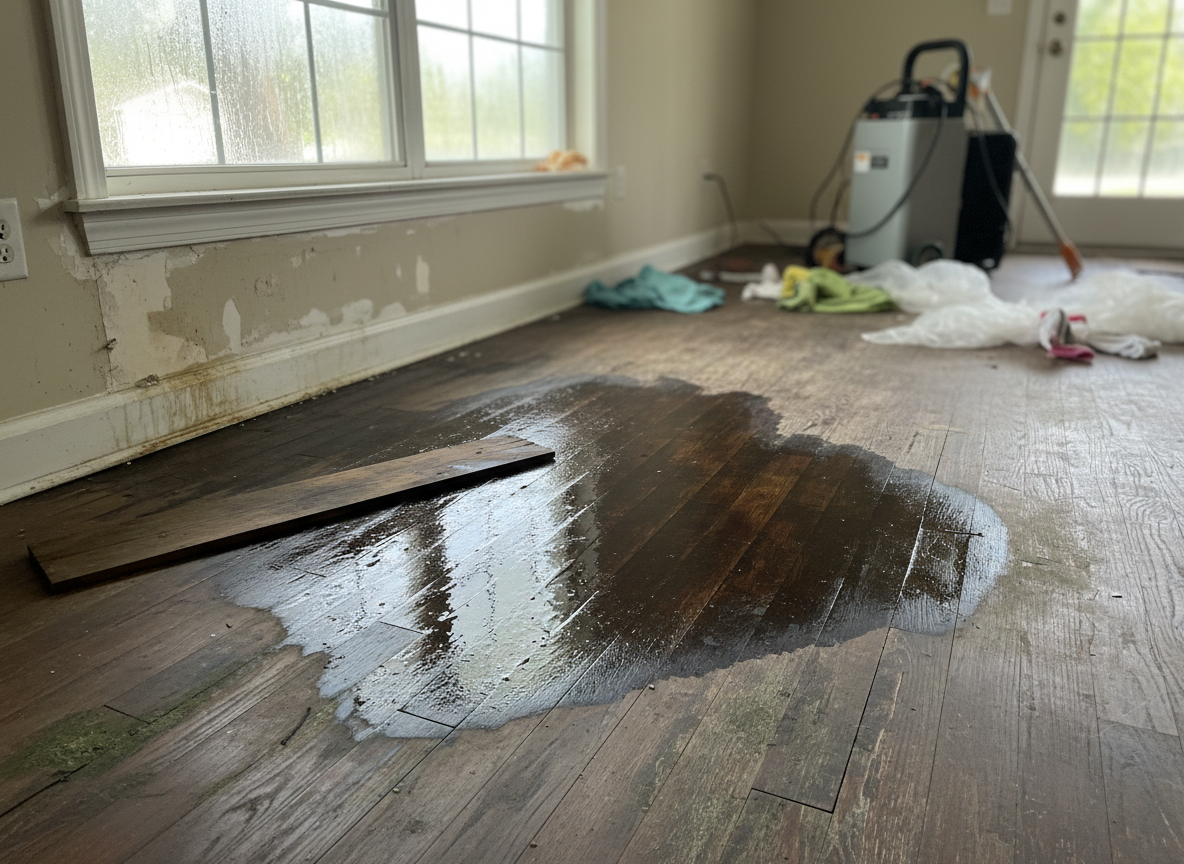
A wet hardwood floor in Florida can often be dried and kept if the water was clean, it sat less than a day or two, and the boards are still flat or only slightly cupped. Floors soaked by storm surge or outside flood water, boards that have lifted off the floor, and any wood with mold under it are usually replaced. HomeGuide's 2026 cost guide puts new hardwood at $7 to $25 per square foot, so the decision is worth getting right.
Why hardwood behaves differently on a Florida slab
Most Florida homes are built on a concrete slab, not a wood subfloor. Hardwood on a slab is usually engineered wood glued to the concrete or a floating floor over a foam pad and plastic sheet. Solid strip flooring nailed to plywood is more common in older homes and second stories. That matters because water has different places to hide. In a glue-down floor, water can sit in the adhesive layer and weaken the bond. In a floating floor, water collects on the plastic sheet under the pad and has no way out until the boards come up. On a second floor, water soaks the plywood and drips into the ceiling below.
Reading the boards: cupping, crowning and buckling
Wood swells as it takes on water, and the shape it takes tells you a lot.
- Cupping: the edges of each board sit higher than the center. Moisture came from below and the bottom of the board swelled more than the top.
- Crowning: the center is higher than the edges. This often shows up when a cupped floor was sanded flat before it dried, then shrank.
- Buckling: boards lift off the slab or subfloor. The floor has swollen so much it has nowhere to go but up.
Mild cupping can flatten again as the floor dries. Crowning from early sanding is permanent. Buckled boards are almost always replaced, at least in the area that lifted.
The water source decides a lot
The IICRC S500 standard sorts water into three categories, and they change the answer.
- Category 1, clean water: a supply line, an ice maker line or a water heater. Hardwood soaked by clean water is the best candidate for drying in place.
- Category 2, gray water: a washer, a dishwasher or an AC drain pan. Drying can still work, but the wood and the area under it need cleaning.
- Category 3, outside water: storm surge, a flooded street or a sewer backup. Porous materials it soaked are removed, and that includes hardwood and its pad.
After Hurricanes Ian, Helene and Milton, most hardwood that sat in surge water along the Gulf coast came out for this reason.
How a wet hardwood floor is dried
If the floor is a candidate to keep, speed is everything. The EPA says mold can start on wet materials within 24 to 48 hours. The restoration crew extracts standing water first, then lays drying mats on the floor that pull moisture up out of the boards under suction. Air movers and dehumidifiers run in the room at the same time. Drying a hardwood floor usually takes longer than drying carpet or drywall, often several days. The crew compares meter readings against a dry board in another room of the same house. Sanding and refinishing wait until the floor matches that dry reading and has stayed there, which can take a few weeks while the wood settles.
When replacement is the better call
Replace the floor, or at least the damaged section, when any of these are true:
- The water came from outside or from a sewer line.
- Boards buckled, split or separated at the joints.
- A floating floor sat on a wet pad for more than a day or two.
- Mold shows on the back of the boards or on the slab under them.
- The engineered top layer has started to peel from its core.
If only part of a room is damaged, matching new boards to an older floor can be hard. Many homeowners end up replacing the whole room so the finish and color match.
What it costs
HomeGuide's 2026 cost guide gives these ranges:
- Drying after a clean water leak: $4 to $6 per square foot.
- Drying after gray water: $6 to $9 per square foot.
- New hardwood flooring: $7 to $25 per square foot, depending on wood type, finish and layout.
- Mold remediation if growth is found: $15 to $30 per square foot.
The written estimate should list drying, removal and replacement as separate lines, so you and your insurer can see the cost of each choice.
Insurance and the first call
A sudden leak inside the home, such as a burst supply line, is often covered under a Florida homeowners policy. Flood water and storm surge are not; they need a flood policy. Either way, take photos of the floor before anything is moved, keep a sample board if boards are pulled, and save the moisture readings. If water is on a hardwood floor right now, shut off the source, pull up rugs and wipe up what you can. Then call for emergency water damage restoration so drying starts while the floor still has a chance. For a full rebuild after the floor is dry, see water damage repair.